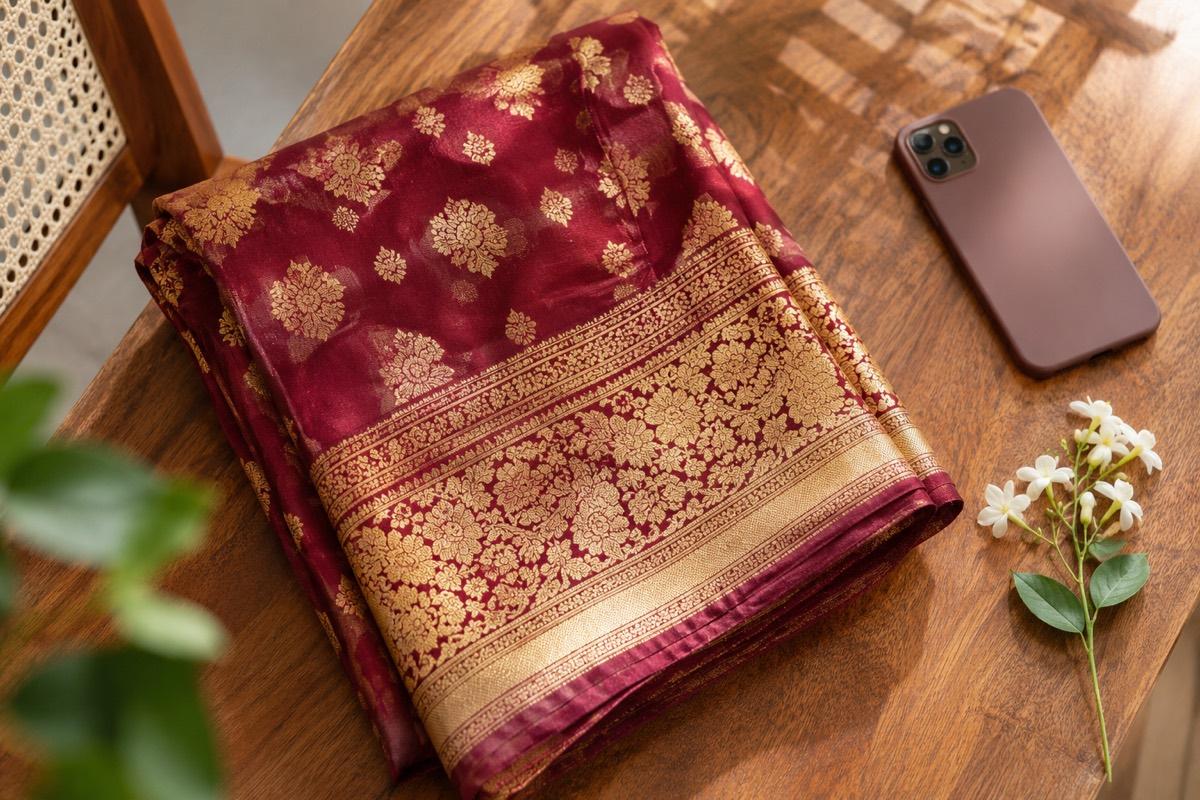
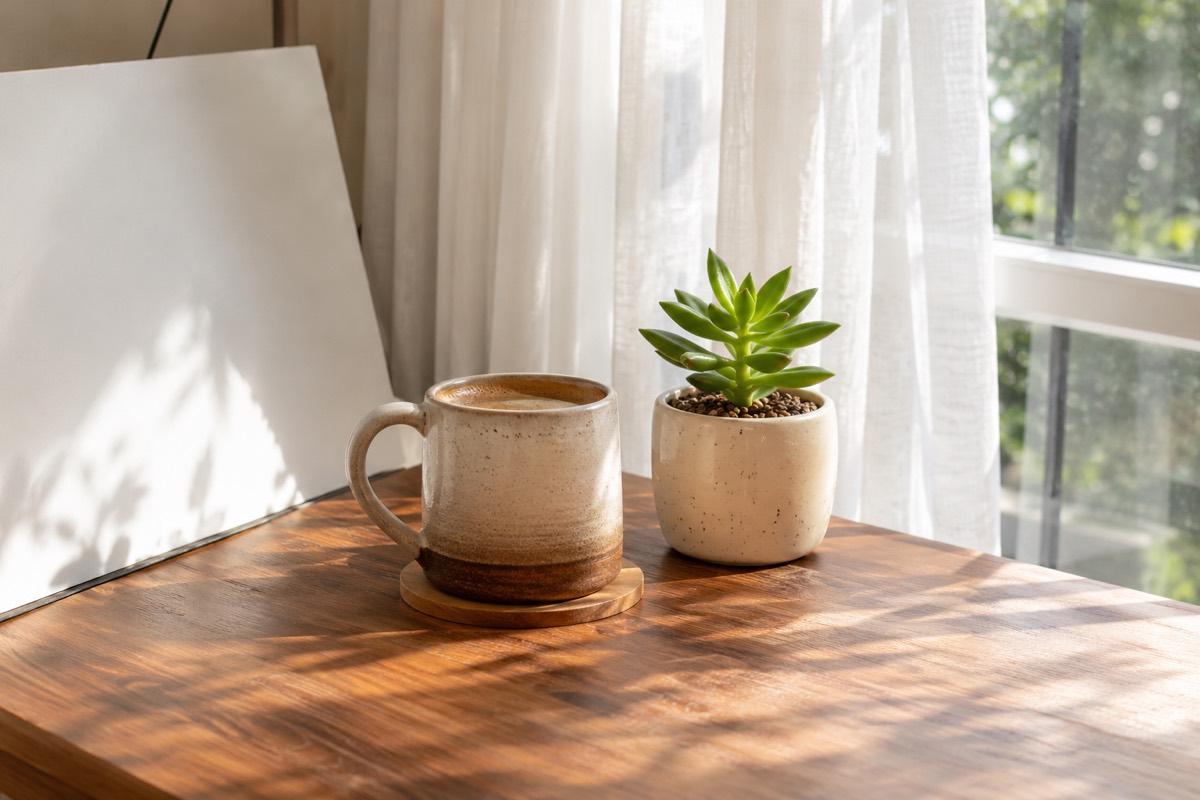
You do not need studio lights to take good product photos. A window, a white sheet and a piece of card can produce soft, even light that shows colour honestly. That is exactly what marketplace buyers want.
Natural light does have quirks. It changes through the day, it can be harsh in an Indian summer afternoon, and it disappears in the monsoon. This guide explains how to work with window light, control it with simple diffusers and reflectors, and pick the right time to shoot.
Why window light works so well
A large window is effectively a big, soft light source. The bigger the light source compared with the product, the softer the shadows. That is why a product near a window looks gentle and three-dimensional, while the same product under a single ceiling bulb looks flat or harshly shadowed.
Daylight also has a neutral colour compared with most household bulbs. Shooting in daylight is the simplest way to keep whites white and reds red.
Switch off every room light while you shoot. Mixing yellow bulbs with daylight creates a colour cast that is hard to remove later.
Setting up near a window
- Choose the biggest window you have. North-facing windows are often ideal in India because they get indirect light for most of the day, but any window without direct sun on the table will do.
- Place a table close to the window. Put the product about an arm's length from the glass. Closer gives softer, brighter light.
- Shoot with the window to the side. Side light shows shape and texture. Light from directly behind you flattens the product; light from behind the product makes it a silhouette.
- Add a plain backdrop. A sheet of white chart paper curved from the table up the wall gives a seamless background.
- Steady the phone. Window light is softer but dimmer than direct sun, so phones choose slower shutter speeds. A stand prevents blur.
Diffusers: taming harsh sun
When direct sun hits the product, you get hard shadows, blown-out highlights and glare on shiny surfaces. A diffuser spreads that light out.
| Diffuser | How to use it |
|---|---|
| Thin white curtain | Draw it across the window |
| White cotton dupatta or muslin | Hang it over the window frame |
| Baking or tracing paper | Tape it to the glass |
| Frosted shower curtain | Hang across a large window |
The aim is to turn a small, bright patch of sun into a large, soft glow. If your shadows still have sharp edges, the diffuser is too thin or too far from the window.
Reflectors: filling the shadows
With light coming from one side, the opposite side of the product falls into shadow. A reflector bounces some light back.
- White card or thermocol sheet. The cheapest and most useful reflector. Place it opposite the window, angled towards the product.
- Aluminium foil on cardboard. Gives a stronger, crisper bounce. Use it carefully on shiny products, where it can create hotspots.
- A white wall. If the table is near a white wall, the wall already works as a reflector.
Move the reflector closer for brighter shadows and further away for more contrast. Clothing and food usually look best with gentle fill. Jewellery and glass often need more careful control, which we cover in our jewellery photography guide.
Black card for definition
Sometimes you want less light, not more. A sheet of black card on the shadow side deepens shadows and adds definition to the edges of glass bottles and metallic products.
Best time of day to shoot
Daylight changes in brightness and colour through the day. For product photos, the goal is bright but soft light that stays stable while you shoot.
| Time | Light quality | Good for |
|---|---|---|
| Early morning | Soft, slightly warm | Lifestyle and food shots |
| Mid-morning | Bright, fairly neutral | Most catalogue shots |
| Midday | Harsh if sun is direct | Use a diffuser or shoot away from sun |
| Mid-afternoon | Bright, neutral to warm | Catalogue shots |
| Late afternoon | Warm, golden, fading fast | Mood shots, not true-colour catalogue |
Overcast and monsoon days
Overcast skies act like a giant diffuser, which makes them excellent for product photos. The light is soft and even. The trade-off is that it is dimmer, so a tripod becomes essential. On very dark monsoon days, shoot closer to the window or wait for a brighter spell.
Keeping a batch consistent
Because daylight changes, a batch of 30 products shot over a whole afternoon can drift in colour and brightness. To reduce that:
- Shoot similar products in one session at the same time of day
- Take a reference photo of a plain white card at the start of each session
- Lock exposure on your phone if your camera app allows it
- Review a few photos side by side before packing up
Our bulk catalogue guide covers how to organise larger shoots.
When the light still is not enough
Some days the light is simply wrong, or you need a pure white marketplace background that a window shoot cannot quite deliver. That is when editing or AI tools help, provided you start from a sharp, well-lit photo.
How VisionLab helps
VisionLab takes a clear phone photo and turns it into a studio shot, lifestyle scene or on-model image with even, consistent lighting, across apparel, jewellery, beauty, home, electronics, accessories and food categories. Good window light in your source photo helps VisionLab keep colours and details accurate. You can also remove the background to get a transparent PNG and place the product into a new scene.
Start free with 5 free credits, no card needed.
Frequently asked questions
Is natural light good enough for marketplace product photos?
Yes. Soft window light shows colour honestly and gives gentle shadows. Use a diffuser for direct sun, a reflector to fill shadows, and a tripod in dim light.
What is the best time of day for natural light product photography?
Mid-morning and mid-afternoon usually give bright, fairly neutral light. Overcast days are also excellent because the clouds diffuse the sun.
How do I make a cheap reflector?
Use a white chart paper, card or thermocol sheet placed opposite the window and angled towards the product. Foil on cardboard gives a stronger bounce.
Should I keep room lights on while shooting by a window?
No. Room bulbs usually have a different colour from daylight and mixing them creates a colour cast. Switch them off and rely on the window.